Heroes in Action, Giants in Character


Today, we had the privilege of meeting some truly extraordinary individuals, and among them was Yossi Urim, a man with a remarkable story of survival and kindness. On the morning of Simchas Torah, Yossi, who lives in Sderot,  was shot by a terrorist right outside his shul.

Despite the severity of his injuries, today marked a significant milestone in his recovery as he was finally being discharged from the hospital, over three weeks later. He recounted his incredible tale of survival with us, attributing his life to the timely intervention of two strangers from another community, who courageously came to his rescue. 

Yossi described that on that fateful day, amidst the catastrophic chaos, the local ambulance and emergency responders were overwhelmed and couldn’t reach him in time. Steadily losing blood at home, he started to wonder how he could possibly survive this ordeal. That’s when two men showed up at his house.  Realizing the gravity of the situation, they made a swift decision to drive him to Saroka Hospital themselves.

In an innovative and quick-thinking move, they dismantled one of the closet doors to create an improvised stretcher. They then carefully placed Yossi in the back of their car, doing their best to stabilize him for the journey ahead. As Yossi grappled with his injuries, finding it increasingly difficult to breathe, the men offered words of reassurance, urging him to hold on and promising that help was on the way.

It was at Saroka Hospital where our paths crossed with Yossi, allowing us to bear witness to his story of resilience and the unwavering spirit of human kindness.

One of the men who had come to Yossi’s aid, Leon, embodied the true essence of a hero. Tragically, his life was cut short the very next day, as he too fell victim to a murderous terrorist. Although Yossi was still confined to his hospital bed and unable to visit Leon’s family during their shiva, his parents went to pay their respects on his behalf.

During their visit, Leon’s wife shared an incredible story about her late husband. She revealed that on the night before his tragic death, Leon had spoken to her about the heroic deed he had performed that morning, saving a life by rushing Yossi to the hospital. With a deep sense of responsibility still lingering, Leon asked his wife to please remind him to return to Yossi’s house when this nightmare was all over. When she asked him why, he unassumingly responded, “I need to fix the closet door.” 

יהי זכרו ברוך

Grab and Go

If you had to immediately evacuate your home with no way of knowing when you would be able to return, what would you grab with you on the way out? For most of us, this is nothing more than a purely hypothetical exercise in thought. Yet, for the evacuees who shared their stories with us, this was their reality, as they swiftly fled from their homes and communities. While they are all grateful to be alive and sheltered in a place of safety, the split-second decision of what to take and what to leave behind continues to reverberate even weeks later. Having never been faced with this particular dilemma, I am far from confident that I can answer this question with truthfulness and accuracy. However, hearing these firsthand accounts motivates me to, at the very least, take a moment and try.

Undoubtedly, it is an unsettling thought, imagining oneself in such dire circumstances. Yet, I believe it’s an important exercise, forcing ourselves to consider what truly holds value in our lives. It brings to light the importance of cherishing our possessions, not for their material worth, but for the true meaning they carry. So, as I sit here, pondering over what I would grab and go, I realize it’s not just about the items themselves, but about holding onto the fragments of life that define us, even when the rest of the world seems to be falling apart.

The Power of Presence

THE POWER OF PRESENCE

War. For over three weeks, we have been hyper-focused on the war that is unfolding in Israel.  With the never-ending news cycle, our attention has shifted from one chapter in this story to the next. Attempting to process the unfolding horrors of Hamas’ barbaric attack on our homeland, then trying to somehow come to terms with unfathomable numbers of casualties, hostages, injuries, and the countless displaced families. Our focus then shifted again, this time to the battlefronts, both in the north and the south, watching the surgical attacks from the air, and bracing ourselves for the next stages of the battle – on the ground. We have watched cycles of rage and violence unfold in the US and around the entire world, wondering when we will awake from this nightmare, asking ourselves this can truly be happening.

But tonight, together with other representatives of the American rabbinate, I had the privilege to hear from ordinary people who remain singularly focused on the events of this past Simchas Torah.  The Ramada Hotel in Jerusalem, one of many hotels which are currently providing hospitality to evacuees from both the north and south, is currently providing shelter, food, warmth, programming, and relative calm, to over 1600 people who watched the horrors of that fateful day unfold in real-time. They shared their stories with a mixture of intense trauma and profound composure.  Men and women, of different ages and backgrounds, sharing the horrifying events of three weeks ago.  I, together with my friends and colleagues, did the only thing we could do – sit and listen. I could not help but feel exceptionally inadequate to be sitting in that space, profoundly aware of how little I could possibly understand and appreciate the trauma that they had experienced.

Yet, something remarkable happened. Something which I have seen so many times before yet caught me by surprise tonight – they were all so grateful for our presence and concern. They felt so lifted and comforted knowing that there were others who cared for them, their families, and their communities.

The simple act of lending a listening ear, providing a space for them to share their experiences and their pain, served as a vivid reminder that sometimes, all it takes to make a significant impact in someone’s life is to be present, to show up, and to listen. In the midst of the chaos and the devastation, the simple act of being there communicated more than words ever could. It was a moment of genuine connection.

As I listened to their stories, I realized that this act of listening was not just beneficial for them; it was transformative for me as well. It was a stark reminder that in our quest to provide solutions and fix problems, we often underestimate the power of presence. We forget that sometimes, all a person needs is to feel heard, to feel seen, and to know that they are not alone.

So, as we navigate the complexities of life and encounter people who are experiencing challenging times, let us never underestimate the impact we can make by simply offering a listening ear. Let us remember that our presence, our ability to listen, and our willingness to simply be there can be a source of hope and strength to those in need.

Get Your Head in the Clouds

19

When informed that one is “daydreaming” or that their “head is in the clouds,” the instinctive reaction is often defensive. We inherently value attentiveness and concentration, both from ourselves and from those around us. Indeed, whether we are immersed in a task or involved in a discussion, our productivity and efficacy are typically heightened when our minds are fully engaged and present in the moment.

Yet, according to Rebbi Eliezer, having one’s “head in the clouds” is precisely the mindset that one is to maintain while seeking to achieve optimal fulfillment of the mitzvah of yeshivas sukkah.  The Torah, while instructing us to sit in a sukkah for seven days, uncharacteristically embellishes this directive, by way of an explicit revelation of the underlying reason for this mitzvah. In Vayikra chapter 23, the Torah states:

בַּסֻּכֹּת תֵּשְׁבוּ שִׁבְעַת יָמִים כָּל הָאֶזְרָח בְּיִשְׂרָאֵל יֵשְׁבוּ בַּסֻּכֹּת. לְמַעַן יֵדְעוּ דֹרֹתֵיכֶם כִּי בַסֻּכּוֹת הוֹשַׁבְתִּי אֶת בְּנֵי יִשְׂרָאֵל בְּהוֹצִיאִי אוֹתָם מֵאֶרֶץ מִצְרָיִם אֲנִי ה’ אֱלֹקֵיכֶם

“You shall dwell in temporary shelters for seven days.  All native-born Israelites are to live in such shelters.  So your descendants will know that I had the children of Israel live in temporary shelters when I brought them out of Egypt. I am Hashem your G-d.”

On the surface, the Torah’s precise intent in this context does not seem even slightly ambiguous, nor is there any apparent need for commentary.  Quite to the contrary, the Torah’s message seems abundantly clear; we sit in a sukkah in order that we should come to remember the sukkah.  Quite simple.  Surprisingly however, the rabbis of the Mishna debate the true meaning and consequence of this pasuk.  The Talmud in Maseches Sukkah 11a records the following braisa:

תניא: (ויקרא כג) כי בסכות הושבתי את בני ישראל ענני כבוד היו, דברי רבי אליעזר. רבי עקיבא אומר סוכות ממש עשו להם

“It was taught in a braisa: ‘that I had the children of Israel live in temporary shelters’, these were the clouds of glory, so are the words of Rebbi Eliezer. Rebbi Akiva says, literal huts were made for them.”

Rebbi Akiva is of the opinion that the Torah means exactly what it says; we sit in the sukkah to commemorate the huts that protected us from the sweltering heat and the harmful elements, as we wandered aimlessly through the desert. Yet remarkably, Rebbi Eliezer offers a dramatically different perspective. Sitting in the sukkah represents something far more profound, even transcendent.  According to his opinion, sitting in the sukkah serves to commemorate the special protection that we received from the ananei hakavod, the clouds of glory, whose hovering presence provided unceasing divine protection throughout our sojourns in the desert.

While reflecting upon these two opinions of the tannaim, a striking question comes to the surface.  According to Rebbi Akiva, it is quite understandable how sitting in a sukkah can effectively remind one of the experience of sitting in a sukkah. One need not be imaginative, nor creative in any way. Simply being in the moment and connecting with one’s surroundings, should be more than sufficient to enable a person to generate the requisite awareness for fulfilling the mitzvah.  According to Rebbi Eliezer, on the other hand, it is quite perplexing to understand how sitting in a sukkah is similar or reminiscent of the experience of being shielded by a protective cloud.  The structure of a sukkah bears no apparent resemblance to a cloud and provides no natural outlet for such a mindset.

Rav Nissim Alpert z”l concedes that there is, in fact, nothing that we can possibly construct on this earth which can adequately simulate the experience of being protected by a cloud. Clouds are practically invisible, forever elusive and, if anything, generate feelings of instability, exposure and vulnerability.  Neither brick and mortar, nor fiberglass, canvas or wood, can serve to create a space which resembles the delicate features of a cloud.  Perhaps, argues Rav Alpert, that is precisely the point. The notion that we were protected by the ananei hakvod in the desert is, at its core, synonymous with the concept of hashgacha pratis.  In order to successfully connect with the memory of protection and shelter provided by clouds of glory, we must necessarily envision transcendence, rather than succumb to distractions of mere illusions of earthly spaces of shelter.  On Sukkos we are called upon to remember that our every need, without exception, is provided for by the One above.

If this is indeed the case, then why are we instructed to leave our homes? Could we not (simply) engage in focused meditation and deep introspection, enabling us to achieve an inspired awareness of divine protection, all from the familiar comforts of our own homes?  Explains Rav Alpert z”l, herein lies the dilemma.  Ironically, it is precisely from within the familiar confines of our permanent structures, where our vision suddenly becomes clouded. Because our natural shelters and our homes create a façade of genuine safety and protection, our ability to perceive hashgacha pratis often becomes considerably obstructed.  When surrounded by four walls and a roof, it is much easier to lose sight of our true and complete dependency upon G-d, and succumb to the self-generated myths of independence and dominance.

Therefore, the Torah instructs us to temporarily extricate ourselves from our permanent structures, to break away from our comfortable and familiar settings, and take a seat directly beneath the stars. Rather than obstruct our view, the schach widens our perspective and sharpens our focus.  The immediate instinctual feelings of exposure and defenselessness are soon replaced with feelings of security and protection. It is precisely within the temporary and frail structure of the sukkah, that one can begin to achieve a true and genuine sense of divine shelter and safety.

It would seem that the message of the sukkah has never been more relevant than it is today, as its message speaks directly to an early 21st century generation bombarded with unprecedented challenges and temptations. Technology has enabled us to create virtual walls and structures, providing us with a continuous sense of safety and protection.  Whether it is the security provided to us by digital firewalls or our grossly exaggerated confidence in unlimited access to knowledge and information, we are living at a time where many of us have ever-inflating illusions of omnipotence and immortality.  Anyone with a smartphone in his hand wields access, potential and power, all of which could only have been imagined a generation ago – if even that!  One would naturally expect that such extraordinary scientific advancements would yield measurable improvements in the emotional stability and mental health of our generation. Having the world at our fingertips should be more than enough to bring calm and reassurance to those who would otherwise be anxious, and restore faith and stability to society’s most emotionally compromised and spiritually vulnerable. Remarkably however, research and studies have shown the opposite to be true.  Recent advancements in technology seem to be triggering an unprecedented surge in anxiety and depression.  At first glance, such developments seem counterintuitive.  Shouldn’t our generation, blessed with unlimited access and control, feel greater safety and security than previous generations?  Should we not be observing a marked decrease in anxiety and social withdrawal?

Once again, the mitzvos of the Torah, which are both immutable and eternally relevant, provide us with the necessary insight, we would otherwise be lacking. Permanent structures, while providing us with protection from the elements, do not ultimately satisfy our innate need for feelings of purpose and transcendence. Access to information and the capacity to digitally monitor and control one’s home and finances, while convenient in many respects, are grossly inadequate substitutes for genuine feelings of emunah and bitachon.  Being connected to a worldwide network, while affording us the opportunity to instantaneously communicate with millions of people at the click of a button, often creates feelings of existential loneliness, rather than genuine comradery and connection.  The Torah provides us with a solution, which is both simple and profound; “אמרה תורה כל שבעת הימים צא מדירת קבע ושב בדירת עראי” (Sukkah 2b) “The Torah says that for seven days one should leave his permanent dwelling and live in a temporary dwelling.”
We must designate times in our life, during which we extricate ourselves, albeit temporarily, from the façades of safety and security, and seek shelter in the warm protective cover of the clouds of glory. These clouds can be accessed when, and only when, we walk away from our desktops, turn off our smartphones and disconnect from our familiar “reality”, which is truly virtual (at best).  The imperative to seek shelter in the ananei hakavod is more essential today than ever before. The more technologically advanced our world becomes, the more urgent and indispensable the need for spiritual cultivation and emotional reinforcement.  These engagements cannot be initiated by downloading and accessing a particular app. These processes are not the products of a carefully scripted digital code, nor facilitated through an online service.  They occur in the very spaces and places where they have been successfully conducted for centuries. We become more spiritually attuned in houses of worship and study. We become more emotionally adapted and fortified through meaningful connections with friends and family. We become more spiritually stable and secure by strengthening our connection to G-d, through prayer and study. We offset feelings of worthlessness and helplessness by recognizing the constant hashgacha pratis that we have in our lives.  We can mitigate and even overcome invading thoughts of worry and doubt by pulling ourselves away from our digital devices and strengthening our connection to our Father in heaven.

Herein lies the timeless message of the sukkah. Ultimately, the sukkah offers each and every one us an opportunity for spiritual rejuvenation and growth. May we be inspired to truly escape our permanent dwellings and seek shelter in the secure and sustaining walls of the sukkah, thereby deepening and strengthening our connection to Avinu shebashamayim.

Building a Diaspora-Style Community in Israel

An Interview with Rabbi Larry Rothwachs (reprinted with permission of Mizrachi magazine)

This past February, Rabbi Larry Rothwachs wrote to his community in Teaneck, New Jersey that he would be making Aliyah over the next few years to build a new community in Israel. A leading pulpit rabbi in America for over 20 years, he is currently the Rabbi of Beth Aaron in Teaneck, NJ, the Director of Professional Rabbinics at RIETS, and a licensed social worker. Rabbi Aron White spoke with Rabbi Rothwachs to hear more about the vision for his new community and the future of religious Aliyah.

When did your dream of Aliyah begin, and what made you decide to take this step now?

My wife and I both considered Aliyah when we were newly married and planning our future together. However, as our professional careers evolved, first in Jewish education and then in the rabbinate, we ultimately concluded that remaining in the US was the most appropriate choice for our family. We recently announced that we hope to make Aliyah in a few years. While there is certainly some personal motivation involved – two of our children are living in Eretz Yisrael and a third has plans to do so soon – we have decided to move in this direction at this time, as we have been offered an opportunity to spearhead a new community in Israel.

We were approached by representatives of the Rotshtein Company, well-known developers, who are building a new project in Ramat Beit Shemesh called Rotshtein Heights. They had a vision to create an Anglo community from the ground up and enlist the support of an American rabbi to encourage a broad base of prospective olim to join in establishing this community. The beautiful neighborhood that has been planned and is currently being developed, includes 1,300 residential units, schools, shuls, parks and commercial areas. We have been incredibly impressed with the dedicated vision of the principal parties and with the quality and thoughtfulness of their planning and implementation.

What are your plans for the Rotshtein Heights community?

My vision for our new community, which will be called Meromei Shemesh (מְרוֹמֵי שֶׁמֶשׁ), has been shaped and inspired by my experience of over two decades in the rabbinate. During the years that I have been privileged to serve as the rabbi of Congregation Beth Aaron in Teaneck, I’ve had the good fortune (and, in other respects, the challenge) of witnessing 20% of our shul make Aliyah. While none of them have reported that they regretted their move, many have shared that they miss various aspects of communal life in America. Although this may mean different things to different people, many have expressed that they miss belonging to a community with a shul at its core, serving as the center of their spiritual and social lives. While I am sure there are exceptions, many have expressed that they feel that the shul experience in Israel is not the same as the American model. Many American Jews are fortunate that their shul provides them with a social, spiritual, and educational infrastructure. They appreciate the value of living and growing within a multigenerational kehillah; one that provides a range of programming and opportunities, from an active youth department to meaningful programs for retirees. To be clear, I am not attempting to transplant my shul, or any shul for that matter, but I believe that members of my shul and the broader American community, as well as many people looking for a community in Israel, will gravitate towards this vision. Our community here in Teaneck speaks to many people, and I am excited at the prospect of being able to assist in the creation of a similar home for people in Israel.

Another innovative feature of our budding community is that there will be a designated and structured space for a shul, available to our new residents from the first moments that they settle in their homes. While it will understandably take time for the full construction of the shuls and schools which will hopefully populate the area, the developer has generously designated commercial space for the use of a shul, for as long as it is needed. Conversations and planning with municipal leaders have already begun, allowing for the creation and strengthening of important and strategic relationships. It is incredibly exciting to see a community begin to take form and develop, even as the project is still under construction.

You mentioned the difference between communities in Israel and the Diaspora, which is something many olim struggle with. How can more Diaspora-style communities flourish in Israel?

It would be presumptuous of me to attempt to answer this question, as I have yet to settle in Israel myself. That being said, you have challenged me with this question, and I will share a few thoughts. On the surface, it seems somewhat ironic that some have reported difficulty in building shul-based communities in Israel. While there may be many reasons for this challenge, it is worth noting at least one difference between communities in Israel and America – the relationship between religion and state. In America, the separation of religion and state means all of our Jewish communal institutions – schools, shuls, and mikvaot – are private initiatives built by the community. In Israel, it is the government that provides many of these services. The Misrad HaChinuch (Ministry of Education) builds the schools, the Iriya (local municipality) builds the preschools, and the Misrad LeSherutei Dat (the Ministry for Religious Services) builds the mikvah. The community is tasked with one primary responsibility: to build a shul. While one would think these incredible benefits would make it easier to galvanize resources and enlist dedicated communal support, it is possible that it is precisely because the government is so involved, that a different type of culture evolves. Whereas Diaspora Jews know that they have no choice but to collaborate in the creation and development of their entire communal infrastructure, Israeli communities often rely on the wealth of government resources that assist them in their growth and development. While there is no question that these benefits constitute an incredible blessing which should not be taken for granted, they may also contribute to a vacuum, with community members feeling less engaged, motivated, and incentivized. Many of the people who make Aliyah spent decades giving of their time and resources to their Diaspora communities. However, in Israel, some do not succeed in finding similar outlets for this type of communal involvement. I am hoping that we will be able to offer our community members opportunities that they may be seeking to make their mark and to contribute through Torah, chessed, communal involvement and more.

This past January, I enjoyed the privilege of meeting the new Minister of Aliyah and Absorption, Ofir Sofer, together with several colleagues from America. I was incredibly impressed with the minister, a sincere and genuinely humble individual who expressed interest in learning more about how Israel can help facilitate American Aliyah. He has plans to visit our community in Teaneck in the coming weeks to learn more about American communities and how the Ministry of Aliyah and Absorption could do more to support prospective and current olim

There is no question that it is fascinating to navigate the various channels and pathways of community building in Israel. As I mentioned, the environment is different from what we are familiar with in America. At the same time, this is part of what it means to function as a Jewish state. The Torah itself envisions different and overlapping roles within structured communal leadership: malchut (government), nevuah (prophecy), and kehunah (religious leadership), or three unique zones of leadership, necessitating a blend of political and spiritual leadership. It seems that this is part of life in our renewed Jewish state.

Many Jews in the Diaspora are blessed to live rich spiritual lives in strong communities. How can people in this situation keep the dream of Aliyah alive?

There is no question we have built strong Diaspora communities that are rich in Torah observance. But our religious observance should make it obvious to us that we are not meant to be in chutz laAretz. It is true that on some level, we have everything we “need” in the Diaspora. But almost a third of our shemoneh esrei is about our return to Israel – the ingathering of the exiles, the restoration of judges, the building of Yerushalayim, the arrival of Mashiach. It is true that in respect to certain short-term needs we have created opportunities for a rich Jewish life for individuals and communities in exile. But as a people, if we take what we say seriously, then we must acknowledge that our eventual return to Eretz Yisrael is literally what we pray for three times a day.

For over 20 years, I have shared with the members of my community that as individuals and families, Aliyah is a personal choice and must be respected as such. There are many different factors that are relevant to the question as to whether one should make Aliyah, and, if so, when. This reality must be met with respect and individuals who choose to live outside of Israel should be supported and their personal choice validated. Nobody should be made to feel guilty for living in the Diaspora. But as a community and as a people, we must hold ourselves to a different standard. From a national perspective, there is great value in promoting Aliyah and I believe that rabbis in the Diaspora should be clear and unapologetic in their messaging. There should be no discomfort, nor hesitancy, in proclaiming the message that the future of the Jewish people is in Eretz Yisrael, and thus, as a community, we should be able to plan passionately and, when appropriate, self-reflect critically. We must be willing to acknowledge and wrestle with the reality that despite the fact that we have a thriving State of Israel, the Aliyah rate from America is still close to 0%! How can we take ourselves seriously if we say for generations that we want to return to the Land, but don’t take the opportunity when it presents itself?!

There is another difference between life in the Diaspora and in Eretz Yisrael, that bears mentioning in the context of this conversation. In the Diaspora, our focus is on preservation and survival. Our primary objective is (and should be) to protect ourselves from assimilation, the most extreme manifestation of which is intermarriage. We must also contend with more subtle expressions of assimilation, and cultural indoctrination. In the Diaspora, we focus on preserving the integrity of our heritage. Community development in the Land of Israel has somewhat of a different focus. The model shifts from one of preservation and survival to one of building and developing the infrastructure of our future. In a certain sense, we have “arrived.” The miraculous events of the past 75 years represent the unfolding of a vision that was foretold many centuries ago by our prophets. Jewish life in Israel is not focused on preservation, but rather realizing and actualizing our nation’s ultimate destiny.

There was a time in history when the State of Israel served as a haven for thousands of Jews who were seeking refuge from death and persecution. And, for Jews in some places in the world, it still is. In his monumental essay, “Kol Dodi Dofek,” Rav Soloveitchik zt”l listed the miracles of modern Israel, and taught that the sixth miracle (“knock”) was that Jews now have a safe haven and can escape persecution. Despite the alarming rise in antisemitism in the United States and around the world, we do not seem to be at a point where people feel that they need to run and escape. 

Nevertheless, our goal should be to run to Israel, not merely to run away from where we are. Rabbi Yissachar Teichtal hy”d, the famous author of Eim Habanim Semeichah, shares a beautiful vort. We read in Shir HaShirim: מָשְׁכֵנִי אַחֲרֶיךָ נָּרוּצָה, “pull us towards you and we will run” (Shir HaShirim 1:4). In halacha, there is a legal transaction called “meshicha” which allows you to take ownership of something. There are two ways of performing a kinyan meshicha when acquiring an animal. A person can call an animal so that it follows his command or, alternatively, the one who is seeking acquisition can hit the animal, causing it to run ahead. According to Rabbi Teichtal, this verse is saying – “Hashem, acquire us, pull us towards You through a kinyan meshicha – but let it be the kind of meshicha where You call us and we run to You, rather than us being hit and having to flee!”

What is your elevator pitch for your future community?

We are looking to establish a community that is growth oriented. Aliyah means ascent, which is, of course, geographical, but is also intended to reflect a process of spiritual growth. Although I have not yet taken permanent residence in Israel, I have been fortunate to lead a community of “bnei Aliyah,” of people who are growing. Our goal in Meromei Shemesh is to create an environment that is conducive to growth as individuals, as families, and as a community. At times, we encounter a lot of pain and confusion in life and in the world. There are many families that are disjointed and relationships in need of repair. As part of my mission as a rav and as a teacher and in my role as a mental health professional, I have tried, in some small measure, to assist some in healing some of those wounds. This is a core Torah value. If people are looking for that kind of community, I believe they will find it in Meromei Shemesh at Rotshtein Heights. Another feature of the Teaneck community of which I am quite proud, is the sense of peace and harmony within the broader community. I hope and pray that we will be zocheh to build a community that has similar aspirations and achievements.

Aloh Na’aleh!

For more info re this project, please contact David Wiener at 718-207-6766 (US) or Avi Nefoussi at +972 52-400-5893 (Israel).

Why Intergenerational Conversations Matter To So Many

(Published on https://18forty.org/ here)

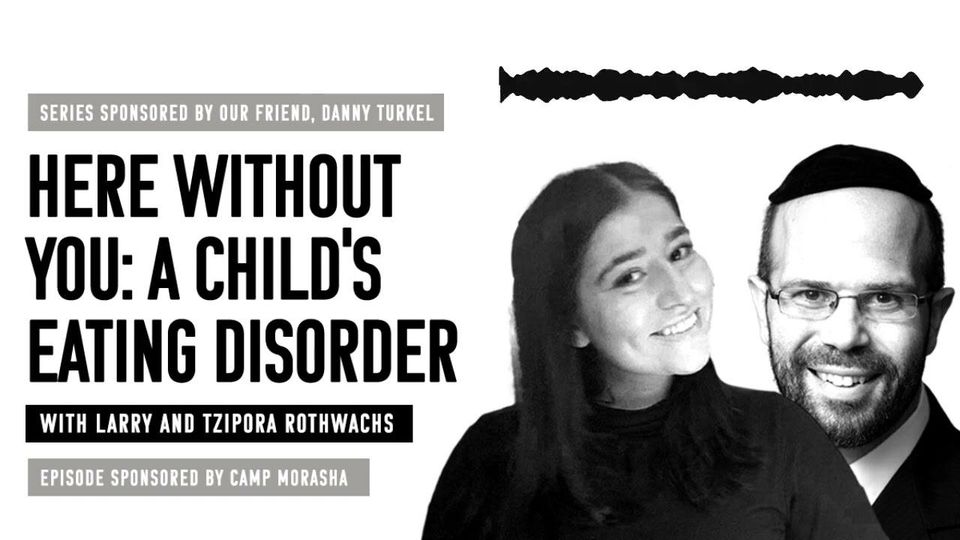
One year ago, my daughter Tzipora and I accepted Rabbi Dovid Bashevkin’s invitation to participate in a recorded interview in which we would reflect upon personal experiences that had never been shared in any public setting. While I have no way of measuring the impact of this conversation, I continue to marvel at 18Forty’s virtual reach. Although a year has passed since that episode dropped, hardly a day goes by that I am not approached with thoughtful words of feedback or a simple passing comment from the most unexpected voices. To be honest, other than contemplating with amazement the extent of 18Forty’s sizable audience, I have not really given much thought as to why this conversation seems to have resonated with so many.  But then Reb Dovid returned with a second challenge—to share a written reflection regarding our interview, one year later.  Despite some initial reluctance, my interest was piqued by this challenge, as it motivated me to dedicate some time to consider why, in fact, our conversation, in addition to other similar interviews that have been published on this platform, seems to resonate with so many. To be clear, I have not conducted a survey, nor do I presume to speak on anyone’s behalf. With an imaginative eye toward the typical listener, I submit three thoughts for your consideration.

I. Limited Exposure

Our recorded conversation was, in every way, genuine and authentic. The interview was unscripted, our dialogue was unrehearsed, and our emotions were raw. Yet, as was certainly evident to all who listened, despite all the details that were candidly revealed, much remained intentionally concealed and tucked away. For reasons that were expressed during the interview, we consented to expose parts of ourselves that were sacred and private and, at least in some respects, rather unflattering. That said, there was a method and structure to our conversation, as it was guided and driven by objective values and purpose.  

It seems to me that conversations reflecting this type of symmetry resonate deeply and appeal to us in a most unexpected way. At times, it may even feel like a breath of fresh air. This is especially so because, on a societal level, we seem to really be struggling to achieve any semblance of balance when attempting to share our inner worlds with others. All too often, we are exposed to, or perhaps actively engaged in, one of two extremes. On one end of the spectrum, many rush to publicly display versions of themselves that are staged and inauthentic. While some may find it entertaining to consume these counterfeit exhibitions (ironically, often characterized as “reality entertainment”), the true reality is inescapable—these presentations lack authenticity and are thus profoundly unrelatable. At the opposite end of the spectrum, many well-intentioned individuals routinely reveal way too much information in public settings. What was once considered to be personal and intimate is casually broadcast to global audiences. Inner thoughts that should be reserved for one’s most intimate friends and family are habitually shared with mild acquaintances and, in many cases, complete strangers. If we want to share of ourselves in a manner that will be truly helpful and supportive to others, we must commit to achieving a healthy balance, by reminding ourselves that we can be sincere, authentic, vulnerable, and relatable, while still maintaining traditional boundaries and honoring all appropriate limits.

II. There’s Room for More Than One

In my interactions with individuals, both personally and professionally, I have often found that people tend to believe that they need to choose whether to be positive or negative at any given point in time. This perspective is predicated on the belief that emotional states of being exist on a linear scale and, therefore, one can only occupy a single point at any particular moment in time. On the surface, this assumption seems quite plausible. After all, how can one be both happy and sad, proud and ashamed, confident and insecure?  While our moods certainly do fluctuate and our emotional states naturally shift—even abruptly at times—one cannot possibly feel two conflicting emotions simultaneously. Or so it seems.  

The reality, however, is that the human psyche possesses the capacity for a profoundly complicated mix of emotions at every moment in time. We are, in fact, capable of simultaneously holding conflicting emotions and we need not choose to select one to the exclusion of the other. The commonly held belief that one’s active inner experience must remain one-dimensional can greatly frustrate any efforts to achieve emotional stability. Clinging to this belief can be quite exhausting and can leave one feeling confined and detached. I was delighted that many who listened to my conversation with Tzipora were able to detect the emotional inconsistencies and identify the contradictions within our individual and shared experiences. For us personally, our struggles have led us to discover our own capacity to simultaneously accommodate conflicting emotions, and this discovery has been truly liberating.

III. Discover Joy in the Struggle

My conversation with Tzipora revealed several aspects of our personal lives.  Our story, while perhaps inspirational to some, clearly did not conclude with the joyful tagline, “and they lived happily ever after.” Although we shared openly of our victories and accomplishments, it was reassuring to receive feedback from those with discerning ears who correctly detected the lingering tension in our voices and accurately sensed our ongoing struggles and residual pain.  Indeed, many of our scars remain fresh and yes, there are wounds that have not yet healed, and perhaps they never will. These sobering realities need not obstruct a listener’s ability to draw inspiration, nor do they sabotage the very purpose of the interview.  Quite to the contrary, they enhance the process and support the mission. Real life is sloppy, and even after reconciliation has been achieved, many edges remain forever jagged. It is not beneath me to admit that there were moments during the past year when I was feeling defeated under the weight of our “unhealed wounds,” and precisely at such moments, I was able to achieve a measure of comfort by listening to various segments of this interview. In life, we must allow ourselves permission to discover purpose and joy, not only through our accomplishments and victories but even, if not especially, through our unresolved struggles.     

On Pesach, we are each called upon to share our story.  Through the mitzvah of sippur yetziat mitzraim, we engage in a dynamic process of give-and-take. We ask questions and, if we are fortunate, participate in an exchange of meaningful answers. We recount our experiences by employing the format mandated by our sages, matchil bi-gnut u-misayem bi-shevach—we begin by sharing our struggles and pain and we conclude with expressions of hope and positivity.  Beyond its relevance to the Pesach seder, I believe that our rabbis are providing us with a template that may be utilized whenever we engage in the process of personal storytelling. We can secure the integrity of our individual stories and effectively share them with others when we preserve our authenticity while maintaining appropriate boundaries, when we learn to comfortably inhabit an inner world of complexity and contradiction, and when we succeed in discovering joy and meaning in the never-ending struggles of life.

How Secure Are Our Connections?

Last year, at a moment in my life when I needed it most, I stumbled upon a forgotten collection of personal home videos.  It took me several days to obtain the obsolete, though necessary, hardware to review the many recorded hours of our family’s history.  The delightful images and joyful sounds (albeit analog) immediately transported me back in time, magically returning me to a distant place of relative calm and serenity. 

The unanticipated recovery of these long-lost videos, recorded over 20 years ago, triggered a rush of memories and emotions. For the most part, these nostalgic feelings were unremarkably pleasant.  As I continued to indulge in the joyful consumption of my newly discovered 8mm treasure trove, I could not shake the feeling that something quite significant was noticeably absent from the many recorded scenes of my past. At first, I was unable to accurately identify what exactly it was that was so apparently missing.  I could not name it and I could not place it, yet it was absolutely evident that something was missing in every video.

And then came the moment when it became so abundantly clear.  Of course!  Devices with screens were nowhere to be found in any recorded event. For several hours, I found myself transported back in time to a world that seemed so profoundly different from the one I currently occupy. Children playing in the yard and in the park, their curious eyes fixated on the beautiful world around them. Brothers and sisters interacting with one another (not always so peacefully) employing a full range of skills, typical of natural sibling engagement. Family gatherings and multigenerational get-togethers, occupied by individuals who seemed genuinely interested in reacquainting with family and friends.  And the many, many eyes. Individuals young and old were visually engaged with the world around them, looking up and looking at one another, rather than sitting, standing, or walking unnaturally and awkwardly with their eyes gazing downward and their necks locked at 35° angles.

There have been countless efforts to warn the public of the many dangers posed by unhealthy use of the internet, smartphones, social media, and the many ubiquitous features of modern technology. This is not the time nor the place to spotlight the numerous areas of documented risk. At least for the moment, I will spare you yet another lecture, however important such discussions may be, explicating the multitude of hazards associated with excessive use of technology, including addictions, exposure to pornography, online gaming, sports betting, cyberbullying, increased incidence of mental illness, and more.

Instead, I prefer to redirect our collective attention in an attempt to observe what is all too often missing from our lives; a healthy and sustainable supply of genuine human connectivity.  In my opinion, it is this consequence of the excessive and incautious use of technology, more than anything else, that poses the single greatest risk to ourselves, our families, and our community.  Given the multitude of risks and challenges associated with the unguarded use of technology, it may seem surprising to focus on the absence of that which may seem to be more of a luxury, than a basic human necessity.  Allow me, if you will, a moment to plead my case.

From the moment of birth (if not beforehand), a newborn is primed to recognize and respond to the stimulus of a human face.  Research has demonstrated that infants actively seek this connection, instinctively scanning their surroundings in an effort to lock gazes with the attuned eyes of another (typically, the mother).  Over the course of a child’s development, through and including the period of adolescence, the innate need for this type of connection must be sufficiently met and nurtured in order to promote healthy socio-emotional development.  If this need is not met and a child’s bids for attention go repeatedly unrecognized, his emotional development will become stunted and his capacity to form healthy secure relationships in the future will become severely compromised. 

Please consider taking several moments to watch the following clip (yes, on YouTube, haha), featuring a 1996 demonstration of the “Still Face” experiment: https://www.youtube.com/watch?v=IeHcsFqK7So.  Despite having watched this numerous times, I am unceasingly fascinated by this demonstration and equally horrified when I consider its implication for an entire generation of children who are constantly forced to compete for attention and connection.  At a certain point, as we have each observed many times over, children inevitably adapt to a world that is deficient in the requisite supply of human attunement by themselves retreating and finding shelter in the “safety” of their own screens.  This cycle, easily observable by all, is alarmingly pervasive and profoundly destructive.

My friends, some of you know me, others do not. I am not an alarmist by nature. It is not my style to scream from the hilltops, warning the ignorant masses of impending doom and gloom. All I can do is share my observations and the trends that I have witnessed over the past 20+ years, within my home, my classroom, my shul, and my community.  Everywhere I turn, relationships are compromised and strained.  Children are deeply craving for connection with their parents and parents are painfully frustrated by what often appears to be mindless disinterest on the part of their children.  Marriages are suffocating, as husbands and wives repeatedly resort to expressing their deepest feelings by casually selecting from a paltry sample of empty and unsophisticated emojis.  On a societal level, we are bearing witness to a variety of devastating trends, from the complete breakdown and seeming near-extinction of civil political discourse to the complete dismantlement of the traditional family. Everywhere we turn, we are overwhelmed with a preponderance of evidence that reflects the fulfillment of Paul Simon’s prophetic words, “and in the naked light I saw ten thousand people, maybe more; people talking without speaking, people hearing without listening.” 

As a community, we must think thoughtfully and creatively as to how we can restore and protect healthy relationships, the essential building blocks of productive societies, functional families, and individual fulfillment.  We must do so by first acknowledging and accepting the technologically advanced world in which we live.  If we attempt to ignore the realities of our world or introduce communitywide bans, we only exacerbate problems, rather than successfully manage them. Only after we have acknowledged the complicated and potentially frightening consequences of a technologically sophisticated world, can we effectively develop communal norms which encourage healthier methods for integration of technology, while simultaneously promoting emotional well-being and healthy relationship building.  

I am especially proud that our community has embarked upon a collaborative effort, first introduced last week – Living Connected: A Bergen County School-Shul Tech Initiative.  Personally, I am hopeful and optimistic that meaningful and lasting change can be successfully implemented, but only if we address these challenges collectively, as one community.  The technological advancements of the past generation have united billions of people, enabling individuals across the globe to communicate, collaborate, share, and discuss. As we know all too well, this modern-day miracle has introduced global challenges of epic proportions. But introducing meaningful reform and lasting change can only succeed if we harness those very same forces and work together jointly and collaboratively.  

And so, in the spirit of promoting communal initiatives, I conclude with a proposal which, depending on who you are, may seem either excessive and bold or weak and insufficient.  Perhaps each one of us, as part of a community-wide effort, can elect to commit to one of the following:

  • No screens in the home, every evening, for a set period of time.  You decide when and for what duration of time.  Most importantly though, this time should be dedicated for intentional and unobstructed human connection.
  • Grandparents establish a no-screen policy when visiting with grandchildren. Again, you determine the particulars and the parameters. But together, let us commit to the objective.
  • When someone is speaking with you and seeking your time, advice, or attention, do not disrupt that moment by looking at your phone. Commit to creating new habits and protocols when standing face-to-face with another individual.

The navi Malachi prophesied a most glorious vision, to be fulfilled during the days preceding the coming of Moshiach. “והשיב לב אבות על בנים ולב בנים על אבותם.” Eliyahu HaNavi will lead a generation to reclaim and restore relationships that have become strained or impaired.  The prophet foresees a transformational movement that inspires reconciliation between parents and their children and between children and their parents.  May we be inspired as a community to initiate this effort, laying the groundwork for Eliyahu HaNavi, as we work together to secure our connections.

Praying On Purpose

I would like to take this opportunity to personally invite you to participate in a new total learning initiative. Beginning Sunday, August 28, Rosh Chodesh Elul, I will be launching a series on tefillah – Praying on Purpose, – with messages posted three times a week, focusing on the “why,” the “how,” and the “what” of daily prayer. Short motivational messages and insights will post on Sundays, Tuesdays, and Thursdays. If you are interested in receiving these messages via WhatsApp, click the link below or scan the QR code on the flyer.

Praying On Purpose WhatsApp Group (2)

Praying on Purpose postings will also be accessible on Apple Podcasts, Spotify, and other popular podcast platforms.

Praying On Purpose Apple Podcast

Rosh Chodesh Elul is a most opportune time to focus our attention and thoughts on the experience, technique, and content of prayer. Please consider joining this initiative and I encourage you to share with anyone who you believe would be interested. I look forward to beginning this journey with you.

​​​​​​​LR

This initiative is dedicated as zchus for a refuah sheleima for אילנה חנה בת גילה בריינלע

Thank You (Even Though You Messed Up)

This year, tens of millions of Americans will celebrate a Thanksgiving that will feel like anything but the familiar holiday that so many cherish and love.  Rather than enjoying traditional family reunions and football gatherings, families and friends will unite virtually, using all of the devices and tools with which we have become so accustomed over the past nine months. While this modified version of Thanksgiving may feel inauthentic in every way, it need not distract us from the principle theme of the day.

The sacred obligation to recognize and express one’s gratitude is a defining characteristic of every Jew. Indeed, every day begins with the words “modeh ani” (“thank you…”) and our daily liturgy, rituals, and obligations serve to constantly reflect the preeminent requirement to be grateful and appreciative.  It is axiomatic that the obligation to express one’s gratitude applies whenever one is the beneficiary of another’s thoughtfulness, kindness, and generosity.  As Jews however, we are encouraged to consider the virtue of expressing gratitude more generally, even when we fail to experience any benefit due to the actions of another. Perhaps, for the purpose of defining הכרת הטוב in its purest sense, intentions are, in fact, “good enough.”

Please take a moment to enjoy this short film, which I believe so powerfully and aptly captures this idea.

In Shemos 22:30, the Torah teaches, וְאַנְשֵׁי־קֹדֶשׁ תִּהְיוּן לִי וּבָשָׂר בַּשָּׂדֶה טְרֵפָה לֹא תֹאכֵלוּ לַכֶּלֶב תַּשְׁלִכוּן אֹתוֹ.  “You are to be my holy people, so do not eat the meat of an animal torn by wild beasts, rather throw it to the dogs.”  The Torah is teaching that an animal that is killed in a manner other than through a proper ritual slaughter is forbidden for consumption, but may be fed to one’s dog.   At first glance, the Torah is not directing us to offer this prize to any dog in particular. To the contrary, the point simply seems to be that while this sheep is forbidden for human consumption, it is permissible to derive benefit by feeding it to one’s dogs.

The דעת זקנים however suggest that the Torah is directing one to offer this carcass to the sheepdog. The very dog that was responsible to guard and protect this sheep from dangerous predators is to be offered this sheep as a reward. Why would the Torah instruct one to reward the dog in these circumstances? After all, were it not for the dog’s incompetence and failure, this very sheep would still be alive.  What did the dog do to “deserve” receiving this generous bonus?  The דעת זקנים explains that in all likelihood, this dog regularly carries out its responsibilities with devotion and loyalty, but is hardly, if ever, recognized for its achievements. Day in and day out, the dog serves as an effective guardian and protector of the sheep but does not receive any positive words of encouragement, nor expressions of appreciation from its owner. And so, at the very moment at which one’s natural inclination is to express disappointment and outrage at the failure of another, the Torah redirects this instinct and suggests that this would be a perfect time to step back and merely say “thank you.”

Needless to say, this particular prescription would not necessarily meet the satisfaction of animal trainers, nor would it necessarily yield the results one would anticipate from a regulated animal conditioning program. It seems clear however that the Torah is showcasing this example as a display of what we can and should strive to achieve in our interactions and dealings with other people. The Torah is calling upon us to resist the inclination and challenge the instinct to express words of rebuke and disdain when disappointed by the actions or inactions of another. Rather, the Torah reminds us to stop and ask ourselves whether this might be the perfect opportunity to simply say “thank you.”  “Thank you for your efforts, thank you for your thoughtfulness and, most importantly, thank you for all of those other times you got it right.”

Forever Young

Last week, a dear friend and close neighbor passed away. Our family has been fortunate to live directly across the street from Bernice Greenberg a”h and her beloved husband Mishel a”h for over 15 years.   Like so many others who have departed this world over the past six months, many friends and admirers who would have surely attended her funeral were unable to do so, under the current circumstances. While no words could adequately capture a life of 96 years, I feel the need to share personal thoughts of tribute.

Mrs. Greenberg was an incredibly unique individual. She was an accomplished artist who displayed profound creativity in every context and through her insightful lens was able to reflect a fresh perspective in virtually every conversation.  She was relatable to so many individuals, regardless of their ethnicity, background, or age. She had a wonderful and charming wit and a simple, yet pronounced, sense of humor.

There is one particular characteristic though that I would like to highlight in this tribute to her. During the almost 20 years that I had the fortune of knowing Mrs. Greenberg, she did not age at all. If anything, as time went on, she seemed to get younger, rather than older. While she may have not had the physical vigor at the age of 95 that she did at 75, her spirit was always young, her outlook always fresh, and she was forever playful and engaging.  While aging is a fact of life and the physical toll it takes is not subject to one’s personal initiative nor input, Mrs. Greenberg made the conscious choice to remain, always and forever, young at heart. She sought opportunities that enabled her to experience life in a way that she had never before. She cherished moments in which she was able to be inspired and enlightened, even, if not especially, by individuals far less experienced than she.  She took great delight when experiencing new discoveries about herself, her family, her community, and her heritage.  Rather than feeling confused or frustrated, disgruntled or disappointed, her eyes and heart lit up with wonder and amazement whenever she was able to discover something she had never noticed before.

Yet, what inspired me most about Mrs. Greenberg was her insatiable desire to learn and to grow.  On countless occasions, she shared with me how fortunate and blessed she felt to have been offered the opportunity to access many new outlets and channels for Torah study later in life. At times she would exclaim how proud she was to have become a serious student of Torah around the time of her 80th birthday.  There was hardly a text that did not inspire her, nor a Torah subject that did not fascinate her. She had a genuine thirst to grow through Torah and to learn more about the universe and its Creator.

There is one particular moment that I will never forget. Our shul, like many others, offers programming for parents and children to come together and study Torah. “Parent-child learning” programs (on temporary hiatus, given the current state of global affairs) are typically populated by young children, escorted by one or both of their parents. While there is no official cutoff age, I do not recall seeing many kids post bar/bat mitzvah age, regularly participate in this program.

But, one particular chilly Motzei Shabbat last January, Mrs. Greenberg escorted her daughter Ellen and the two of them joined the crowd of other parents and children at our parent-child learning event.   With a pirkei avot in hand, Mrs. Greenberg immersed herself in an ancient text, while surrounded by parents and children, several generations younger. Her presence that evening was a powerful testament and memorable lesson to everyone in the room. During that sacred moment, suffused by a powerful quest to connect with Torah, there was no generation gap to be seen. Mrs. Greenberg’s face radiated with the innocent curiosity of a young girl, excited to experience something transcendent, as if for the very first time.

49509396_371429043661573_2641743966118084608_o

In Shemot (33:11), the Torah describes Yehoshua as a “נער” (lad) even though he was 56 years old at the time.  Rav Avrohom Sorotzkin z”l explains that this is an apt description for Yehoshua, for although he was an experienced mature adult, he possessed the curiosity for wisdom and the desire to grow as if he were still a child. It is for this reason why he was selected to become the successor to Moshe Rabbeinu.  This unique characteristic should be one of the defining qualities of each and every Jew. In fact, the Ba’al Haturim explains that it is for this reason that the keruvim, whose powerful images rest on top of the Aron, possess the faces of children. This image is to remind each and every one of us how essential it is to always strive to grow and mature regardless of our age.

Mrs. Greenberg lived 96 years on this earth. That is four years shy of a century. Yet I hope to always remember her as the one who taught me that regardless of the date on one’s birth certificate, we can always choose to remain forever young.

49521150_371429276994883_2980407832534319104_o