What makes Israelis so stubbornly resilient in the face of adversity? How do they so naturally navigate the storms of pain and hardship with a remarkable fortitude that seems to baffle us all? What is the secret force that enables them to so instinctively adapt, and even thrive, amidst ongoing conflict?
These questions consumed much of my thoughts during my recent trip to Israel. They gnawed at me as I interacted with numerous individuals who had been uprooted from their homes, men and women who carried fresh scars of physical and emotional wounds, and families who mourned the loss of loved ones, and yet, through it all, displayed a resilience that defied common understanding. Upon confronting this resilience, it becomes readily apparent that this is not simply a display of stoicism. It is much deeper than that. It is an expression of strength that seems, in the moment, to transcend all familiar human limitations. As an outsider, it is almost surreal to witness such fortitude in the face of adversity. At particular moments, I heard myself and others remark in disbelief at the exceptional character of these individuals, as if they were ‘cut from a different cloth’. But, are they, in fact, different from you and me? Do we not, when all is said and done, share the same biology? Where does this strength come from? Or perhaps, more bluntly, where can I find some of that?
The resilience we are witnessing (yet again) in Israel does not stem from some mysterious, unique attribute inherent to its people. This extraordinary display of strength is not some superpower that one develops when drinking water from the Kinneret. Rather, it is, I believe, a powerful characterization of a life that has been imbued with deep purpose. This purpose is not some vague and amorphous concept; it is a tangible, ever-present force in one’s daily life. In Israel, the commitment to build a land and sustain a nation is embraced as a personal mission that resonates in the hearts of its people. Every individual is a thread woven into the fabric of the nation’s ongoing story. This collective mission transcends personal goals and ambitions, creating a powerful sense of unity and shared destiny.
And so when disaster strikes and suffering sets in, this sense of collective purpose fosters a resilience that is so much more than just coping or surviving. Each individual carries a sense that they belong to something larger than themselves. Challenges and adversities are not merely personal trials; they become chapters in the nation’s collective journey, imbued with meaning and significance.
This realization should not lead us to believe that those of us living outside Israel are any less focused or committed to our values. It is, after all, a universal human trait to prioritize personal and familial needs, and there is no shame in that. However, in the state of Israel, the entire context provides a unique lens through which the highs and lows of life are experienced. Often, personal struggles, especially when intertwined with the nation’s narrative, are not just individual experiences; they are part of a shared story, a communal journey. This shared experience creates a solidarity that is both comforting and empowering, providing a solid foundation for resilience.
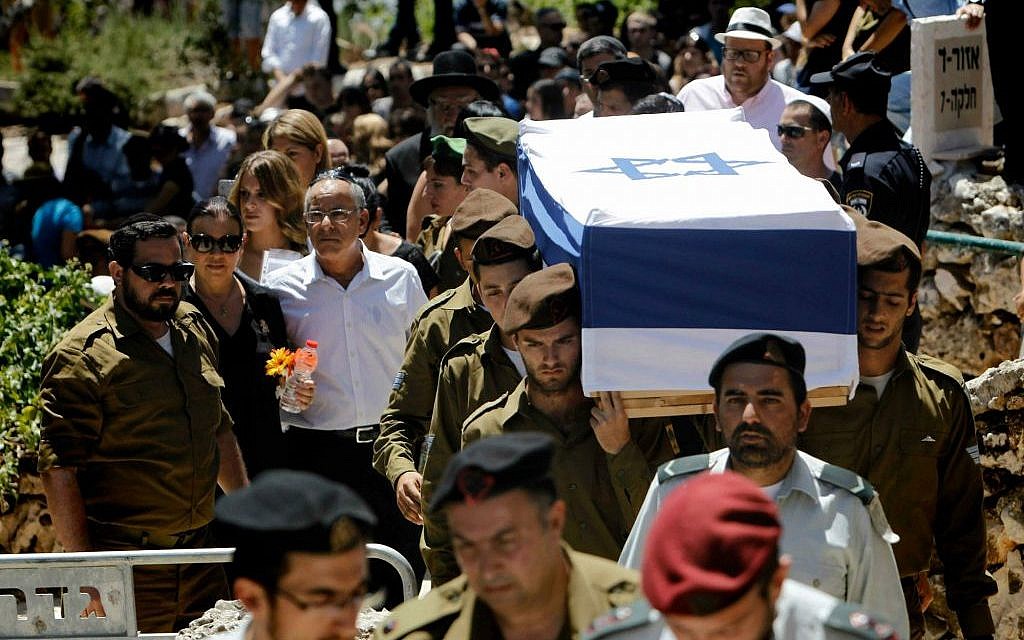
For myself, this realization came into sharp focus when watching the funeral of Eytan Dishon הי”ד, who was laid to rest yesterday, after falling in battle while fighting for his People. At his funeral, his grandfather shared the following remarks with those assembled:
“Several weeks ago, I spoke to the boys in the yeshiva on the occasion of the celebration of 50 years since my aliyah. I made aliyah at the age of 21 by myself, under the shock of the Yom Kippur War. I said to the boys that it’s been 50 years since my aliyah and I don’t regret it. I don’t regret it even for a single minute. And, I still don’t regret it. I know that there is a heavy price to pay להיות עם חפשי בארצנו, ‘to exist as a free nation in our Land.’ Until now I have enjoyed this freedom and the depth of a meaningful Jewish life in Eretz Yisrael, and others have paid the price. Now it’s our turn. I don’t feel angry. I don’t feel disappointed. I just feel deep pride in Eytan and his family and a deep determination that our enemies will not win. Every day that we live in a Jewish state is a victory over Hamas. Eytan gave his life with the awareness and the knowledge that he could be called upon for the supreme sacrifice. He accepted it willingly. He didn’t flinch. Because of him, and men and women like him, we are living as a free people in our land. Is it worth all the pain? Different people will give different answers. My answer, at this moment, is yes, absolutely. It is absolutely worth it.”
These powerful words capture the essence of Israel’s story. They reflect the resilient soul of a nation where personal trials merge into a shared destiny of strength, unity, and an unwavering loyalty to their Land.














 To Whom It May Concern