
Sometimes the most powerful moments in the Torah are the quietest ones—the ones that don’t announce themselves with drama, but sit just beneath the surface, waiting to be noticed. One such moment appears in Parshas Pinchas, when Hashem tells Moshe Rabbeinu that his time is nearing its end. His siblings, Aharon and Miriam, have already passed on. Now it is his turn.
Although we won’t actually read of Moshe’s death until the very end of the Torah, this is the beginning of that process. What’s striking isn’t just the moment itself—but Moshe’s response. The pasuk says:
וידבר משה אל ה׳ לאמר
And Moshe spoke to Hashem, saying.
It reverses the familiar pattern:
וידבר ה׳ אל משה לאמר
And Hashem spoke to Moshe, saying.
Moshe doesn’t ask for more time. He doesn’t focus on himself at all. He turns immediately to the needs of the people and demands that a successor be appointed. A leader who will walk with them, guide them, and not abandon them.
What follows is essentially the Torah’s first recorded job description. Moshe describes the kind of leader the people need—there was no search committee, no focus groups, no resumes submitted. This was a moment of pure transmission and trust. And yet, someone who will go out before them and come in before them, someone who will truly accompany them in their lives. And Hashem answers: Yehoshua. He will be the one.
The Gemara in Bava Basra (75a) describes how Moshe is instructed to confer a measure of his spiritual brilliance upon Yehoshua—not to make him a replica, but to allow him to shine in his own right, through the light he had received:
ונתת מהודך עליו
And you shall give from your splendor upon him.
Not all of it. Just some. And the elders of the generation, upon seeing Yehoshua’s face compared to Moshe’s, declare:
פני משה כפני חמה פני יהושע כפני לבנה
The face of Moshe was like the face of the sun, the face of Yehoshua was like the face of the moon.
And they said:
אוי לאותה בושה אוי לאותה כלימה
Woe to that shame, woe to that disgrace.
At first glance, it seems like a lament over decline. A mourning of what’s been lost. Moshe is the sun—powerful, self-generating, impossibly bright. Yehoshua is the moon—he reflects what he has received. Beautiful, but dimmer.
But perhaps there’s another explanation. The Chafetz Chaim, as cited by his son, offered a different lens. He asked: Are the elders really expressing disappointment in Yehoshua? Isn’t he worthy? Wasn’t he the one who, as the Torah tells us,
לא ימיש מתוך האהל
He did not depart from within the tent?
No, said the Chafetz Chaim. Their cry—אוי לאותה בושה אוי לאותה כלימה—was not aimed at Yehoshua at all. It was an expression of self-reproach, a piercing recognition of their own missed opportunity. Yehoshua was not born radiant. He became radiant through devotion. Through presence. Through years of unglamorous, persistent learning, watching, listening, following.
And they realized: We could have done that too.
It’s the ache of a missed opportunity. Not because greatness wasn’t available—but because they hadn’t stepped forward to claim it.
Rav Shlomo Wolbe z”l, in Alei Shur, explains in depth the concept of hislamdus—a word that roughly means “the art of learning from everything.” A person who lives with a posture of hislamdus doesn’t just learn from formal teachers or elite sources. He learns from life. From people. From encounters. From unexpected places. You don’t need to be a genius or a tzaddik to grow. You just need to be someone who pays attention.
Rav Wolbe anchors this in the teaching of Chazal:
איזהו חכם הלומד מכל אדם
Who is wise? One who learns from every person.
The truly wise are not those with the best teachers, but those who are always learning—because they are always looking.
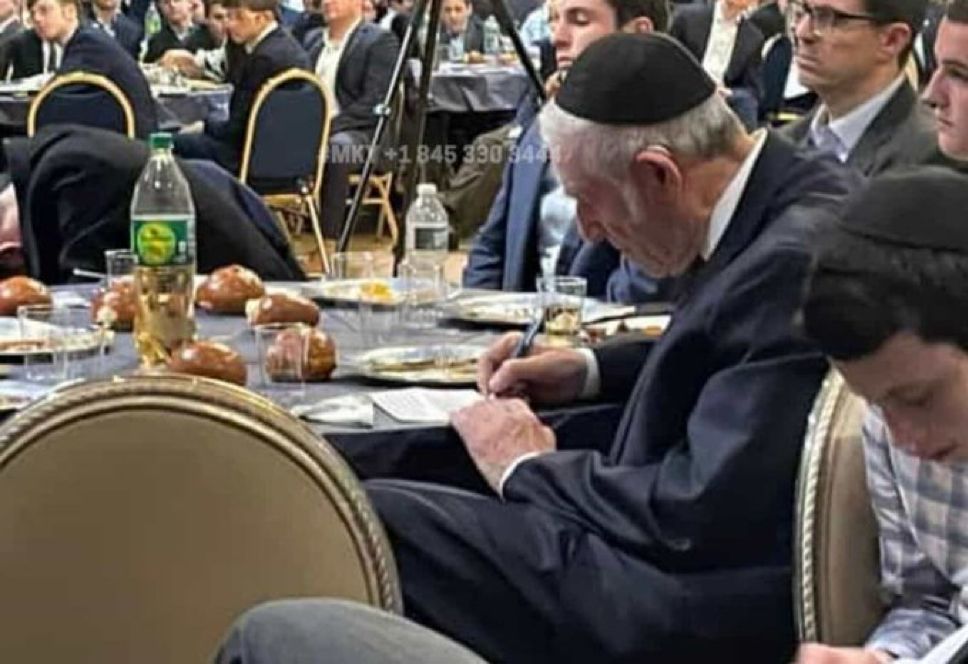
My father-in-law, Rabbi Benjamin Yudin, is a master of this kind of attentiveness. I’ve seen him do this not only at bar mitzvahs and sheva brachot, but even during school Chumash plays. Wherever there’s a possibility that a new Torah insight might be shared, his ears are perked. He listens with full presence and jots down anything that resonates—always alert, always curious. I don’t know what happens to those pieces of paper afterward. But that moment—of respect, of curiosity, of presence—says everything. There is a bikush there.
There is a kind of observant Judaism that has nothing to do with halachic observance and everything to do with attentiveness. An observant Jew, in that sense, is one who observes. Who watches. Who learns. Who notices the moonlight—because he knows it must have come from the sun.
What made Yehoshua worthy was not brilliance. It was his willingness to be present. And what made the elders feel busha and klima was not Yehoshua’s superiority—but their own absence.
The Three Weeks is a time for reflection. Not just national mourning—but personal introspection. And maybe one of the hardest truths to face is not what we’ve lost, but what we’ve walked past. What we could have seized, but didn’t. Who we could have learned from, had we only drawn closer. The greatness that was available… if only we had stayed in the tent a little longer.
We can’t go back. But we can shift our posture now. We can become more present. More curious. More observant.
And we can begin—right now—to reflect more light.
 To Whom It May Concern
Rabbi -First, I hadn’t realized that Rabbi Yudin was your father in law. Vey iz mir, what a mentsch. Second, what do you say about how the transfer of power from Eliyahu to Elisha and how it parallels to the narrative in the parsha? Yehoshua may have learned how to carry out his mission by attending to Moshe, but where is the history of Elisha attending Eliyahu? Seems like Elisha was caught unawares. (My first thought was to relate their ‘initial’ encounter during which Eliyahu tells Elisha to kiss his parents goodbye – to the passage ‘וְהֵשִׁ֤יב לֵב־אָבוֹת֙ עַל־בָּנִ֔ים וְלֵ֥ב בָּנִ֖ים עַל־אֲבוֹתָ֑ם’ – making it a teaching moment, but that’s too much of a stretch).
How do you understand the haftarah/parsha parallel?
LikeLike